
In 2025, I was invited to deliver a series of academic lectures across institutions in the Philippines and the United States, unified by a shared emphasis on strengthening research culture, advancing ESG and sustainability scholarship, and preparing future leaders for an increasingly knowledge-driven global economy. Across business schools, teacher education programs, and academic research forums, my engagements consistently highlighted the strategic importance of intangible capital—particularly human capital, investment in education, knowledge development, and the responsible integration of artificial intelligence into organizational systems. Whether discussing sustainability reporting, research design, or corporate financial performance, the central message remained consistent: long-term value creation is increasingly rooted not only in tangible assets, but in intellectual capacity, ethical leadership, and disciplined inquiry. These lectures collectively reflected my continuing scholarly mission to bridge theory and practice, promote evidence-based innovation, and cultivate institutions that understand how intangible investments shape sustainable and measurable financial outcomes.
Mapúa Malayan Colleges Laguna
Business Leadership Masterclass
August 22, 2025
Mapúa MCL Global Classroom, Cabuyao City, Laguna
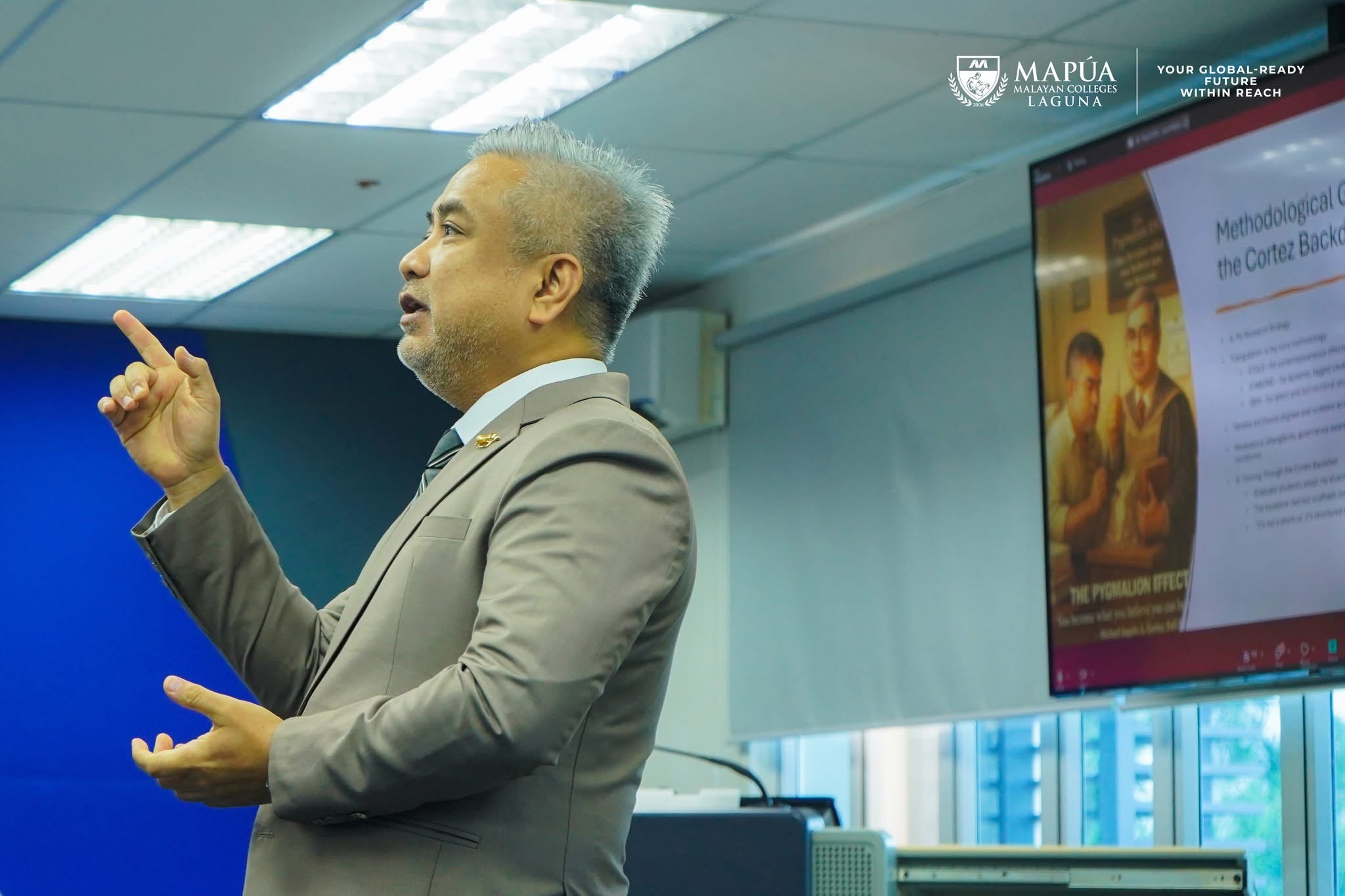
On August 22, 2025, I delivered an invited lecture for Mapúa Malayan Colleges Laguna as part of their Business Leadership Masterclass, held from 1:30 PM to 4:00 PM (Philippine Time) at the Global Classroom in Cabuyao City .

The session was organized in celebration of the ASEAN 2025 agenda, emphasizing innovation, integration, and resilience across the region. The masterclass was attended by students from the College of Business. My lecture addressed sustainable innovation in business leadership, the responsible use of artificial intelligence in the workplace, and strategic alignment of business models with regional development goals .
The discussion emphasized how future leaders can create sustainable value by investing in human capital, developing knowledge-based capabilities, and applying emerging technologies within ethical and disciplined frameworks.
St. Peter’s College of Ormoc, Inc.
Student Seminar-Workshop and Faculty Research Seminar
August 27, 2025
Ormoc City
On August 27, 2025, I delivered two academic sessions at St. Peter’s College of Ormoc.

The morning seminar-workshop, titled
“Designing and Implementing Rigorous Educational Research: From Concept to Conclusion,”
was attended by College of Teacher Education students, particularly those enrolled in research subjects and fourth-year students preparing their thesis work. The session focused on research design, conceptual clarity, methodological rigor, and disciplined scholarly execution.

The afternoon seminar,
“Research for Excellence: Building a Culture of Inquiry in Private School Education,”
was conducted for faculty members and school administrators. The discussion emphasized institutional research capacity-building, publication strategy, faculty development, and aligning research initiatives with Sustainable Development Goals commitments.

These engagements reinforced the importance of cultivating inquiry-driven educational institutions where intellectual capital and research discipline are foundational to long-term excellence.
Philippine School of Business Administration
Academic Forum: Bridging CSR, ESG, and Impact
September 4, 2025
Manila and Quezon City
On September 4, 2025, I served as Resource Speaker for the Philippine School of Business Administration in an academic forum titled:
“Bridging CSR, ESG, and Impact: The Evolving Landscape of Sustainability Reporting” .
The forum was conducted in two sessions: a morning engagement at PSBA Manila and an afternoon session at PSBA Quezon City .

The primary audience consisted of accountancy students seeking deeper understanding of sustainability practices and reporting frameworks. The lecture examined the intersection of Corporate Social Responsibility, Environmental Social and Governance standards, and Impact Investing within contemporary financial reporting systems. Emphasis was placed on global reporting trends, regulatory evolution, and the growing importance of sustainability metrics in corporate valuation and long-term financial performance.

The sessions encouraged future accounting professionals to view sustainability reporting not merely as compliance, but as strategic value creation grounded in transparency, accountability, and measurable impact.
Brigham Young University–Hawaii
Academic Lecture Series – Guest Lecturer
October 22, 2025
Heber J. Grant Building (HGB 275), Laie, Hawaii

On October 22, 2025, I delivered a guest lecture at Brigham Young University–Hawaii as part of the School of Business and Government Academic Lecture Series .
The lecture, titled:
“A Triangulated Exploration of ESG’s Latent and Dynamic Impact on Corporate Financial Performance,”
examined ESG’s latent constructs, dynamic interaction effects on corporate financial performance, and triangulated methodological approaches applied within Japanese corporate contexts.

The session engaged approximately 120 participants, including undergraduate students, faculty, and invited guests . The lecture aligned with the university’s mission of preparing students of Oceania and the Asian Rim to become leaders in their families, communities, and chosen professional fields.
The presentation concluded with an extended dialogue on research design, interdisciplinary collaboration, and emerging directions in sustainability finance scholarship.
Continuing Commitment
These invited lectures reflected my ongoing commitment to:
• Advancing ESG and sustainability research
• Strengthening institutional research cultures
• Investing in human capital and intellectual development
• Promoting responsible and ethical integration of artificial intelligence
• Bridging theoretical scholarship with real-world financial and organizational outcomes
Across institutions and audiences, the consistent message was clear: sustainable economic progress depends not only on physical and financial capital, but on the disciplined cultivation of knowledge, ethical leadership, and strategic investment in intangible assets.
Comments
One response to “Academic lectures & Research Engagements 2025”
Thank you for sharing your knowledge about research. Nakaka-inspire