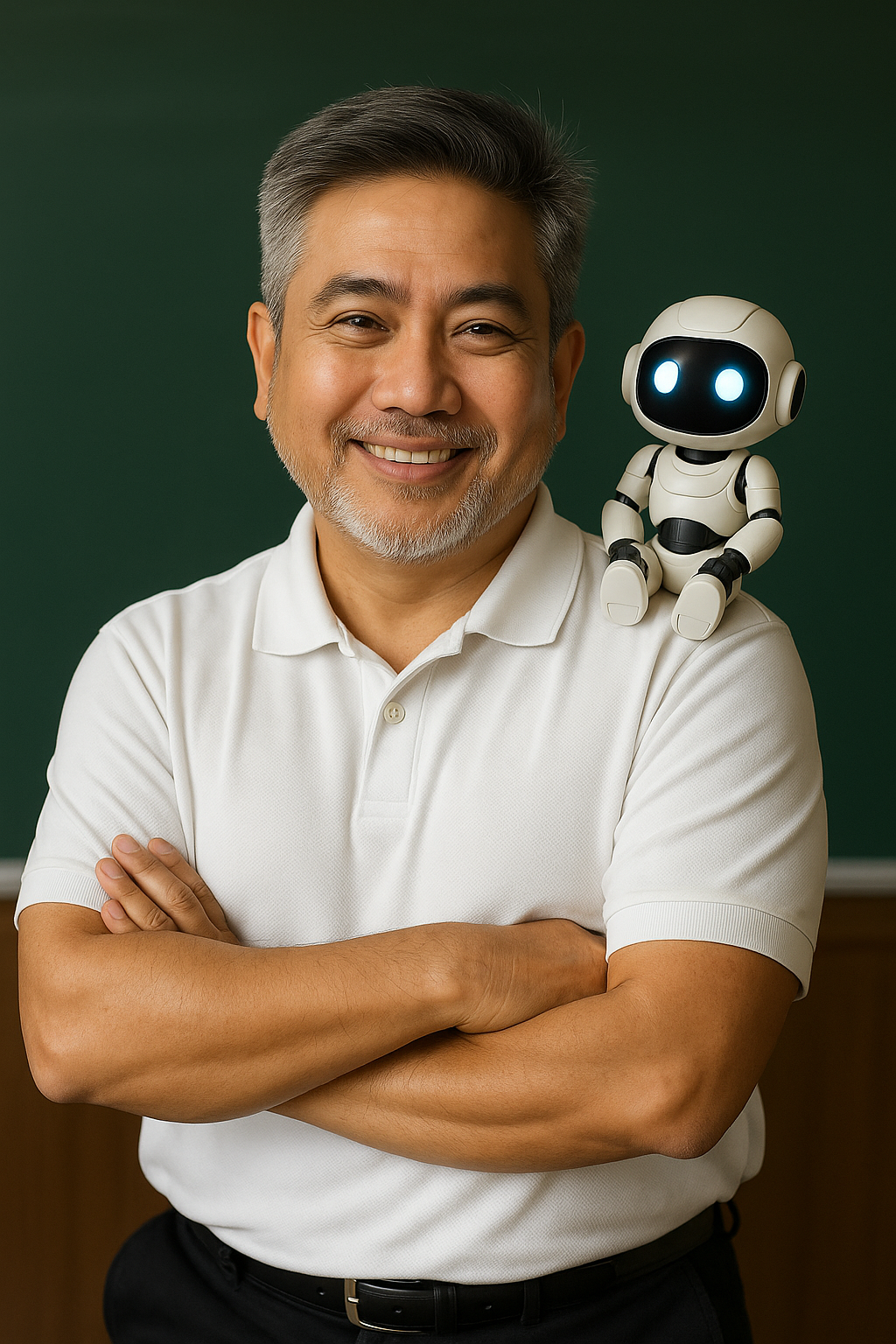
Nope, I’m not afraid of AI. Not one bit. By the time it fully takes over the world, if it ever does, I’ll probably be retired, enjoying slow mornings, sipping my coffee, and tending to my small garden while humming 80s New Wave hits.
But here’s the thing: I’m not worried about me. I’m worried about my students.
You see, post-pandemic, I relaxed the rules in my accounting classes. I allowed open notes, open books, and even open laptops during quizzes. I believed in focusing on understanding, not memorization. But just a few days ago, I updated my operating system and my MS Office, and to my shock (and a little horror), I discovered something new AI add-ins. Yup, Word and Excel now have AI built right in. With a few simple prompts, students can now generate solutions, summaries, even financial reports.
Suddenly, my “open book” policy didn’t feel so clever anymore.
So I did something old school. I went back to fully paper-based exams. Printed quizzes. Handwritten answers. Pencils, erasers, and good ol’ computation tables. And guess what? The tables have turned.
Because while students use AI for answers, I use AI for questions. It’s been a huge help generating multiple sets of exams, practice exercises, and case scenarios. What used to take hours now takes minutes.
But here’s the real question: How can we still teach and learn meaningfully in this new AI-powered world?
As a professor, I now face the challenge of encouraging my students to actually read their eBooks, to practice solving accounting problems by hand, and to understand the logic behind financial reports not just prompt their way through them. Because accounting isn’t just about arriving at the right numbers, it’s about knowing why those numbers matter.
Yes, AI is here. And yes, people say it will replace accounting and finance jobs. But I don’t believe AI will replace professionals who truly understand their field; it will only replace those who never bothered to learn it deeply in the first place.
So, to my students: Don’t just rely on AI. Let it assist you, not replace you. Learn your debits and credits. Practice those journal entries. Get your hands “digitally dirty,” so to speak. Because when you understand the backbone of accounting, AI becomes your tool, not your crutch.
We’re not training robots. We’re training future professionals.
And to answer the original question again: No, I’m not afraid of AI. But I do believe we have to adapt wisely. And maybe, just maybe, sharpen a few pencils along the way.